
Who We Are
Since 2011, School Club Zambia has been at the forefront of improving education in rural communities. We provide targeted training and infrastructure support to schools, helping them enhance the quality, relevance, and creativity of learning. Our work is driven by four key impact areas: self-financing schools, vocational education, literacy development, and girls’ education—foundations that underpin everything we do.
As a UK-registered charity, we are proud to be supported by a diverse and skilled board of trustees based in the UK. Their expertise spans international development, safeguarding, fundraising, finance, and marketing, guiding us with strategic insight and passion.
Equally, we are honoured to have a dedicated Zambian board comprising specialists in NGO management, gender equality, business, marketing, and education. Our Zambian-registered NGO maintains a formal Memorandum of Understanding with the Ministry of Education and a collaborative partnership agreement with the Ministry of Health, testaments to our strong relationships and shared commitment to community development.
Together, our UK and Zambian boards ensure that our programmes are impactful, sustainable, and aligned with national priorities, working hand-in-hand to empower young people and transform education across rural Zambia.

The School Club Zambia (SCZ) was founded as a not-for-profit organisation in Zambia in 2011 and registered as a charity in the UK in 2014. Our founders were professionals from the UK and Zambia who recognised the significant financial and technical gaps affecting schools and communities, particularly in rural areas. After many years of working alongside community schools, they believed that a more sustainable approach was needed – one that would help schools and young people build the skills, resources and opportunities they need to become more self-reliant, rather than relying on infrequent external support.
We began working in Sinazongwe District in 2012, initially focusing on education and practical support for schools. As we gained the trust and respect of local communities, we were able to expand into more community-sensitive areas of work, including HIV/AIDS, gender-based violence (GBV), child marriage, girls’ education and sexual and reproductive health. Over the past 15 years, our work has continued to develop in close consultation with the children, young people, schools and communities we support. We now work with 11 schools and surrounding communities in this remote and drought-prone district, reaching approximately 6,000 children each year. Our work is built around five interconnected areas: self-financing schools, vocational education, literacy development, girls’ education and climate resilience.
Our Self-Financing Schools programme remains an important part of our approach. We provide schools with financial and technical support to establish income-generating enterprises, helping them develop sustainable sources of income that can be reinvested in education. These enterprises also provide a practical foundation for our vocational education and entrepreneurship work, giving young people opportunities to develop skills that can lead to employment or their own businesses in areas where formal employment is extremely limited. Alongside this, our literacy and girls’ education programmes address some of the significant barriers that prevent children, particularly girls, from completing their education.
Our next stage: the Climate Resilience Centre
The next stage in SCZ’s development is the creation of our Climate Resilience Centre on SCZ-owned land near Maamba. We made the strategic decision to develop the Centre because we needed a permanent, accessible base from which to provide high-quality practical training, particularly for young people who are out of school or unable to access further education. It will also make our programmes more sustainable by reducing our reliance on hiring external training venues.
The Centre is being developed as an integrated community hub, bringing together tailoring, weaving, IT and entrepreneurship, regenerative agriculture and climate resilience. It will allow us to expand our vocational and girls’ education programmes while creating a space where young people can learn practical skills, develop businesses and explore sustainable alternatives to livelihoods that place pressure on the environment. We also intend the Centre to provide training space for other organisations working in this remote district, where suitable facilities are currently very limited.
Our aim is for the Centre to become increasingly self-financing within three years, generating income through activities such as tailoring and other enterprises, use of the facilities by partner organisations and training opportunities, while continuing to provide free or accessible training for vulnerable young people. In this way, the Centre represents the next evolution of SCZ’s original vision: creating sustainable local resources that enable children, young people, schools and communities to build their own futures.
Mission
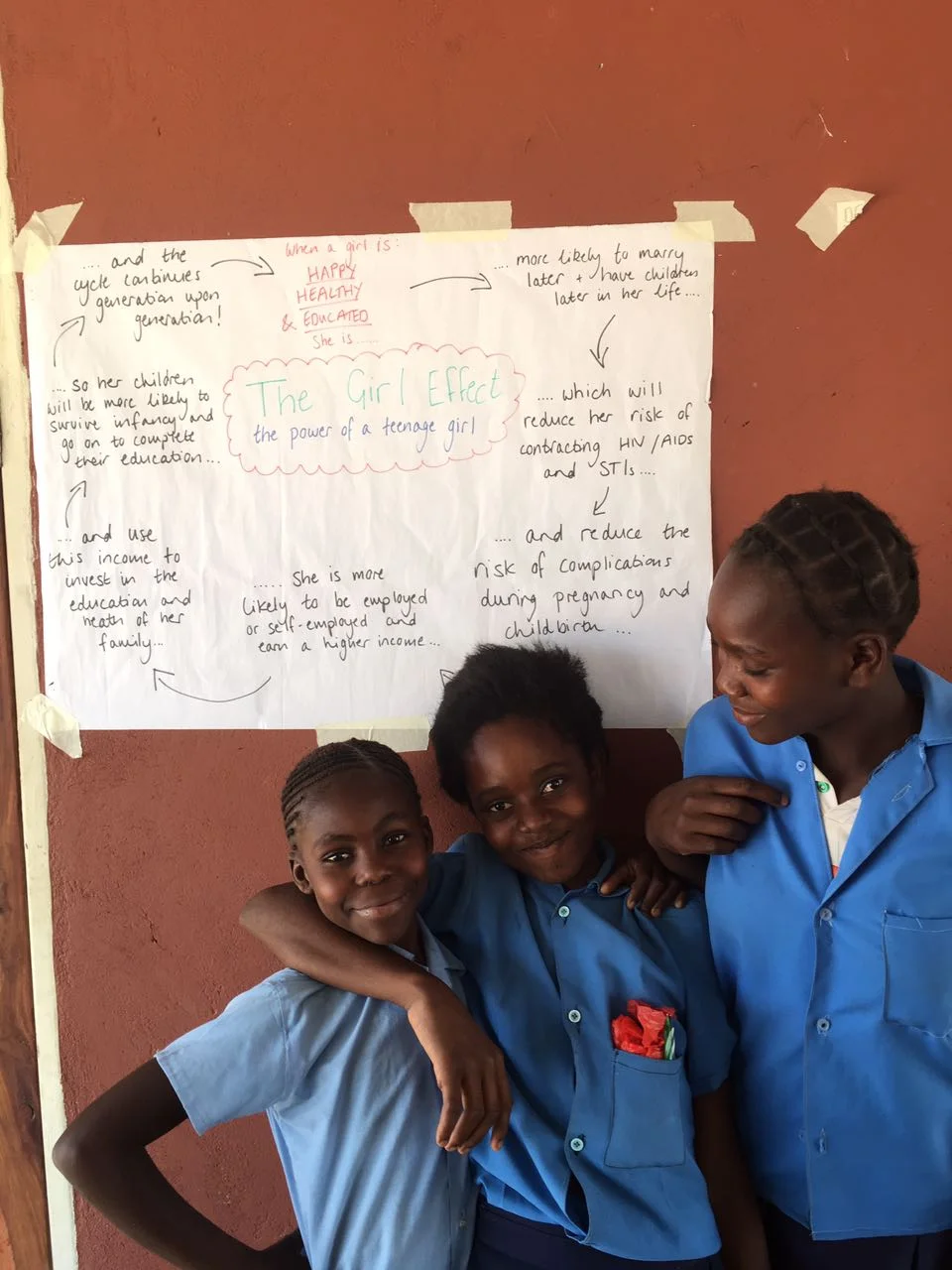
To support vulnerable schools with a relevant financial model, leading to financial sustainability of schools and enhanced levels of education. Our model aims to provide schools with a means to self-generate adequate funding to implement the Zambian curriculum effectively, whilst simultaneously providing sustainable livelihood opportunities through skills training in entrepreneurship, literacy and addressing the particular barriers girls face in becoming entrepreneurs.

Our Values
Youth centred - committed to a child and youth’s rights approach to development with a particular emphasis on article 12 of the UNCRC.
Diverse - utilise multiple trades and skills to combat aid and dependency.
Collaborative - working in partnership with those who share our vision.
Practical - using Specific, Measurable, Attainable, Realistic and Time-Bound (SMART) intervention strategies.
Transparent - ensuring our work and finances are honest and clear to our beneficiaries and donors.